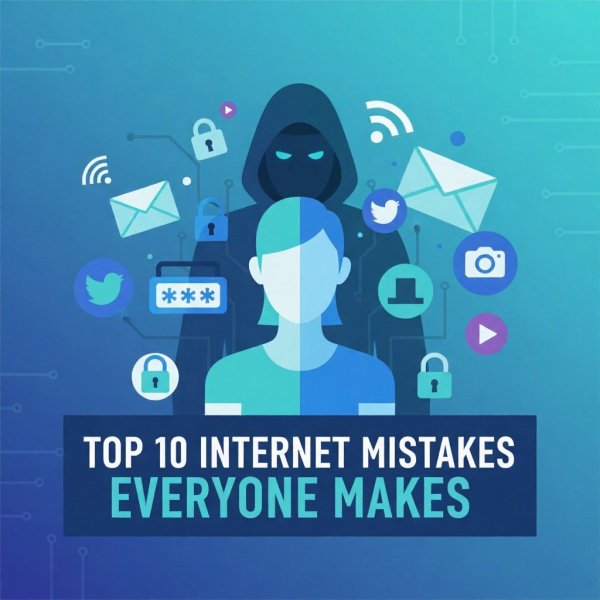
We all think we’re pretty good at using the internet.We scroll, shop, work, chat, and binge-watch like pros .But here’s the thing - the same “I know what I’m doing” confidence is what hackers love.Because that’s exactly when we stop paying attention.So today, let’s walk through the Top 10 Internet Mistakes that even smart people make every single day
Blog
In today’s hyper-connected world, email remains the lifeblood of business communications. From sensitive government directives to financial transactions and cross-border policy coordination, Outlook and similar platforms serve as the arteries of modern enterprises. But when the very tools designed to connect us become the vectors of compromise, the stakes could not be higher.
The Cybersecurity and Infrastructure Security Agency (CISA) has issued an emergency directive mandating immediate action against 55 newly identified vulnerabilities, several of which are already being actively exploited in the wild. While this directive applies directly to federal agencies, the implications extend far beyond government entities. Every organization—across healthcare, finance, manufacturing, energy, and technology—faces elevated risk if these flaws remain unpatched.
In today’s digital-first world, software supply chains have become the backbone of innovation. Developers rely on open-source repositories like npm (Node Package Manager) to speed up application development, integrate libraries, and avoid reinventing the wheel. But with this convenience comes significant risk: malicious actors are increasingly exploiting this trust, embedding malware in seemingly legitimate packages to steal sensitive data.
The Cybersecurity and Infrastructure Security Agency (CISA) has issued an emergency directive mandating immediate action against 55 newly identified vulnerabilities, several of which are already being actively exploited in the wild. While this directive applies directly to federal agencies, the implications extend far beyond government entities. Every organization—across healthcare, finance, manufacturing, energy, and technology—faces elevated risk if these flaws remain unpatched.
When most people think about cybersecurity threats, they picture complex ransomware groups, government-backed hackers, or high-profile data leaks splashed across the headlines. But the reality is that some of the most damaging risks often come from the devices we least expect—the small, everyday gadgets quietly sitting in homes and offices.
- Android Droppers Now Deliver SMS Malware: A 300% Surge in Mobile Threats in 2024
- When Trusted Tools Become Cyber Weapons: The Velociraptor Threat You Can’t Ignore
- New VS Code Vulnerability Exposes Developers to Supply Chain Attacks – Why It Matters for Every Organization
- Storm-0501 Campaign Exploits Microsoft Entra ID: Why Identity Has Become the New Cybersecurity Battlefield
Information
digiALERT is a rapidly growing new-age premium cyber security services firm. We are also the trusted cyber security partner for more than 500+ enterprises across the globe. We are headquartered in India, with offices in Santa Clara, Sacremento , Colombo , Kathmandu, etc. We firmly believe as a company, you focus on your core area, while we focus on our core area which is to take care of your cyber security needs.